
10 May 2026 · Notes from the studio
The saree drape that changes a bridal look
Most brides spend hours on makeup and minutes on the drape. The drape is half the photograph. Three small adjustments that lift any saree, on any bride.
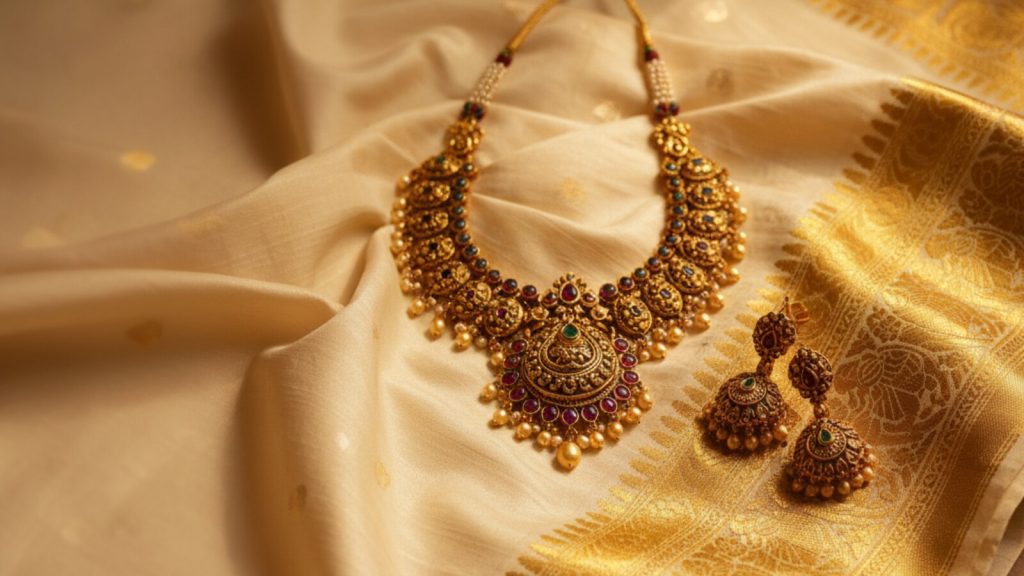
I have draped sarees on hundreds of brides. After a while you start to notice that the difference between a saree that looks “fine” and a saree that looks expensive is almost never the saree itself. It is the drape.
Here are the three adjustments I make on every bride, regardless of the saree, the body type, or the wedding tradition.
One. The pallu length
Most brides leave the pallu too short. They drape it over the shoulder and pin it at the elbow. The result looks tight, and it shortens the visual line of the bride.
The right length is just past the wrist, with about ten centimetres of fall below the hand. Long enough that the gold zari work catches light when the bride moves. Long enough that when she stands still for the photographer, the pallu drapes the body, not just the shoulder.
This sounds small. It is the single biggest change I make.
Two. The pleats over the navel
The pleats at the waist should sit just left of the navel, not centred over it, and they should fall straight down to within a fingerwidth of the floor. Pleats that bunch at the waist make the saree look like fabric. Pleats that hang straight make it look like a designed garment.
The trick is the pleating technique. Each pleat should be the same width (about ten centimetres), and they should be stacked, not folded. Stacking lets gravity do the work; the pleats fall on their own once the pin is in. Folded pleats fight gravity all evening and start crumpling within an hour.
If you cannot do this yourself, this is what we teach in the 2-Day Saree Styling Masterclass. It changes how you think about every saree you own.
Three. The bottom hem
The bottom of the saree should sit at the top of the foot, just covering the toes when the bride is standing barefoot or in flat sandals. Too short, and you see ankle (which looks unfinished in a bridal portrait). Too long, and the bride trips on her own saree all night.
Get the bride to stand in the actual shoes she will wear, then adjust the hem in the moment. Heels change the length by inches. The hem you set in flat sandals will drag on the ground when she stands in lehnga-paired heels.
Why this is half the work
When you look at a wedding portrait, the face takes up maybe a quarter of the frame. The rest is the drape, the jewellery, and the setting. A bride with subtle makeup and a perfect drape will photograph better than a bride with stunning makeup and a hurried drape.
Most makeup artists I know are excellent on the face and rushed on the drape. If you are training as a bridal MUA, learn the drape until you can do it in your sleep. It is half the work and half the photograph.
More notes
Other notes from the studio

20 May 2026
Bridal skin prep, the South Indian way
Sandalwood, turmeric, and gentle ubtan. The skin prep ritual that takes two weeks, costs almost nothing, and changes how your foundation sits…

15 May 2026
Choosing the right bridal course, for where you are now
Three certifications and three short workshops. Which one to pick depends less on price and more on how much practice you already…